When to Start Seeds Indoors: A Beginner's Guide
Ready to get a head start on gardening season? Starting seeds indoors is a great way to extend your growing season, try new plant varieties, and give your garden a strong start before the weather warms up.
But knowing when to start can be tricky, especially if you're new to gardening.
Start too early, and your seedlings may outgrow their containers before it's time to transplant. Start too late, and you could miss out on valuable growing time.
Here's how to plan your seed-starting schedule and get your plants ready for the garden.
When Should You Start Seeds Indoors?
The best time to start seeds depends on what you're growing and when it's safe to move those plants outdoors.
A good starting point is your area's average last spring frost date. From there, you can count backward based on the number of weeks each plant needs to grow indoors.
For example, tomatoes are commonly started indoors about 6–8 weeks before the last expected frost, while peppers often benefit from an earlier start.
General seed-starting guidelines:
- Peppers: 8–10 weeks before the last frost
- Tomatoes: 6–8 weeks before the last frost
- Broccoli: 4–6 weeks before the last frost
- Cabbage: 4–6 weeks before the last frost
- Lettuce: 4–6 weeks before the last frost
- Eggplant: 8–10 weeks before the last frost
These are general guidelines. Always check your seed packets for specific planting instructions, as timing can vary by variety and growing conditions.
Some plants, including beans, peas, and many root vegetables, are often better suited to direct sowing outdoors rather than starting inside.
How to Plan Your Seed-Starting Calendar
Before planting, take a few minutes to map out your growing season.
1. Find your average last frost date. This gives you a starting point for deciding when seedlings can move outside.
2. Check your seed packets. Look for the recommended indoor starting time, germination requirements, and transplanting instructions.
3. Count backward. Use the number of weeks recommended for each plant to determine when to sow your seeds indoors.
4. Mark your calendar. Keep track of planting dates, expected germination, and when to begin preparing seedlings for outdoor conditions.
Remember, your last frost date is an average, not a guarantee. Keep an eye on the forecast before transplanting tender plants outdoors.
Give Your Seeds a Strong Start
Once your schedule is established, it's time to gather your supplies.
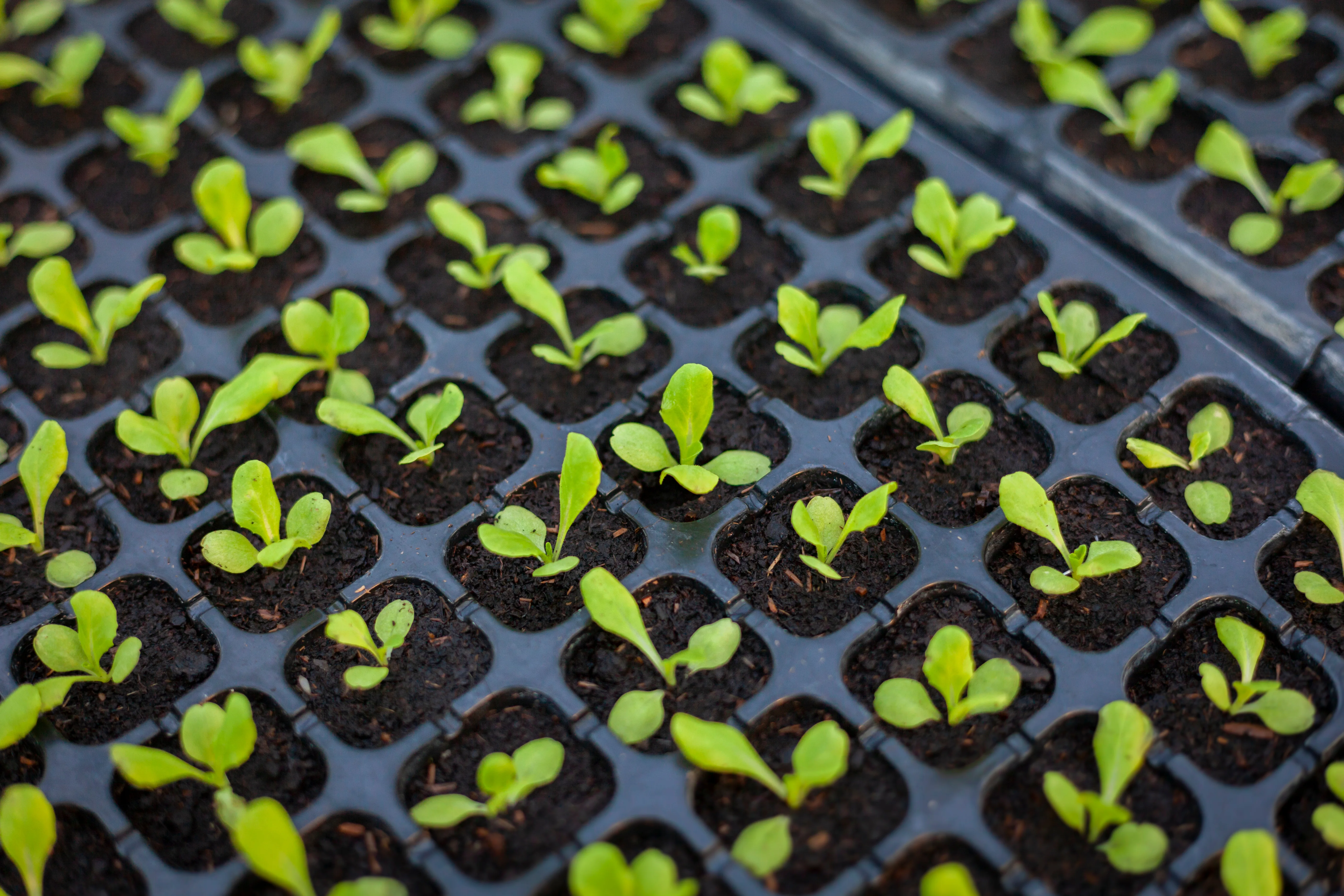
You'll need seed trays or containers with drainage, seeds, a quality seed-starting mix, water, and a suitable light source.
Purple Cow Organics Seed Starter Mix is designed to support seedlings during their earliest stages of growth. Made with our plant-based compost, it provides a growing environment that supports healthy roots, moisture retention, and early plant development.
A few tips to help your seedlings thrive:
- Use a seed-starting mix. A consistent growing medium helps provide the moisture and conditions seeds need to germinate.
- Provide adequate light. Seedlings need plenty of light once they emerge. A grow light can help prevent weak, stretched growth.
- Keep moisture consistent. Your growing mix should stay evenly moist, but not waterlogged.
- Pay attention to temperature. Different seeds germinate best at different temperatures. Some benefit from additional warmth.
- Don't rush transplanting. Give your plants time to develop healthy roots and adjust to outdoor conditions.
Don't Forget to Harden Off Your Seedlings
Before moving your seedlings into the garden permanently, they need time to adjust to outdoor conditions.
This process, called hardening off, helps young plants adapt to sunlight, wind, and changing temperatures.
Start by placing seedlings outside in a sheltered, shaded location for a short period each day. Gradually increase their outdoor exposure over approximately 7–10 days, adjusting for weather conditions and plant needs.
Once the weather is suitable and your seedlings have adjusted, they'll be better prepared for life in the garden.
Ready, Set, Grow!
A successful garden starts long before the first plant goes into the ground. With a little planning, the right timing, and a healthy growing medium, you can give your seeds a great beginning.
Ready to start planting? Purple Cow Organics Seed Starter Mix is available through independent garden centers. Visit our Where to Buy page to find a retailer near you, or shop Seed Starter Mix on Amazon for convenient online ordering.
We'd love to see what you're planting this season. Share your seed-starting progress with us on socials!